Browse articles about every aspect of the club’s history and heritage.

Steve Smith (Heritage Number 396) was born in Huddersfield on April 28th, 1946, and was spotted by Town’s Alf Young while playing for Rawthrope in a schools final at Leeds Road. Young recommended the youngster to Town boss Eddie Boot. Smith joined the club straight from school as a 15-year-old in October 1961, where he began an apprenticeship as a joiner at Leeds Road under the club’s handyman Fred Elms. He signed professional forms two years later in 1963 and made his debut in September 1964, in a 1-0 defeat to Newcastle United at Leeds Road. Caretaker manager Ian Greaves gave Smith...
Lee Morris
In the club’s 114-year history, there have now been over 1000 players that have pulled on the blue and white stripes of Huddersfield Town in a competitive match. They all have their place in history. However, there are also many players that, despite being professionals, never got that far. Those players that didn’t cross the white line in a competitive match still have a story to tell and recently we spoke to one of them. Ian Bertram is perhaps not a name that most Town fans recognise but he was a goalkeeper at Leeds Road between 1965 and 1968. Bertram hailed from...
Robert ‘Bob’ Parker was born on November 26th, 1935 in Seaham, County Durham and spent his younger years playing football for the school team, as well as playing cricket and in his teens, he played football for Durham County. Trials for England Boys followed but in Parker’s own words: “I wasn’t good enough”. He was playing for Murton Colliery Juniors when he was spotted by Town in 1954. At that time, Town were managed by Andy Beattie and were a First Division club and in July 1954, had just achieved their best post-War finish. Parker, who is now 86 years old,...
Mick Meagan enjoyed a four-year spell at Leeds Road between 1964 and 1968, playing 132 matches and scoring a solitary goal, having arrived at the club as part of the Ray Wilson transfer to Everton. Meagan, who later became the very first manager of the Republic of Ireland national team, has passed away at the age of 88.----- Mick Meagan (Heritage Number 395) was born in Dublin, Ireland on May 29th, 1934, but began his career at Everton in 1950 after being spotted playing for the Irish Youth team against a Liverpool County side in Dublin. After spells in the A...
Mike Hellawell (Heritage Number 410) was born in Keighley on June 30th, 1938 and began his career with QPR in 1955. Town had the opportunity to sign him at the time, and he’d been a regular spectator at Leeds Road as a boy, As a 16-year old playing for Salts, Hellawell was spotted by Town scout Andy Bowman and he played for the youth team. The club said he wouldn’t make it, he was “too frail”. Hellawell later joked: “Then they paid about £15-20,000 for me 10 years later!”. After successful spells with QPR and Birmingham City, where he played in the...
Simon Collins was born in Pontefract on December 16th, 1973 and began his career in the youth ranks at Town during the late 1980s. He turned professional in 1992 and became one of the few Town players to play at both Leeds Road and the McAlpine Stadium. His career with the club began in the youth team: “I came through with George Mulhall and he was a super bloke. I think Steve Smith was there originally when I was a 12 or 13 year old in the schoolboys but he moved on and George was the youth team manager when I...
Iain Dunn was born on April 1st, 1970 in York and from 1988 to 1992, he enjoyed a Football League career with York City and Chesterfield. By the summer of 1992, he was playing for Goole Town and in November, began playing with Town’s reserves. He scored five goals in four games before Ian Ross moved to sign him. “I’d gone to Town on trial,” remembers Dunn. “They were really struggling at that time, so training was a bit weird because a lot of the players were a bit down on confidence and I went in probably exploiting it a bit...
Under the close leadership of the great Ian Greaves, Roy Ellam was the defensive backbone of a terrier like squad that relished in the fight amongst the iconic teams of our country. Ellam, a fan favourite, rubbed shoulders with England’s elite and in his flawless defensive partnership with Trevor Cherry settled old scores and new ones alike. Ellam’s industry complimented such flare further up the field, from our very own maverick of the day, Frank Worthington. The legendary win against Arsenal on the 16th of January 1971 (pictured) was commonplace for Ellam, who continued to relish in the underdog siege. However,...
Sean O'Toole
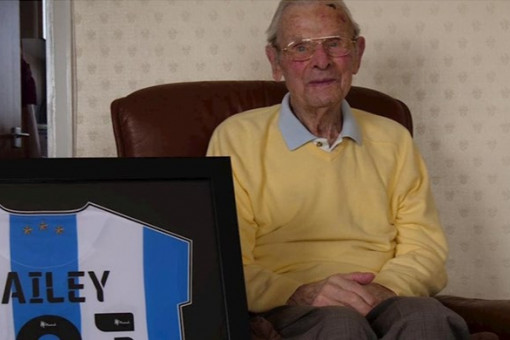
Robert ‘Bob’ Gordon (Heritage Number 267) is one of Town’s war heroes. He died in September 1940 while serving with the RAF. Prompted by a conversation with his former teammate Graham Bailey, Lee Morris set out to find out more about Gordon, including a trip to his native Cramlington to visit his grave and speak to his surviving family.--Graham Bailey Reminisces Back in June, I visited Graham Bailey in Bridlington to catch up with him and his family. Bailey is the club’s oldest living player at the age of 102. As he played for the club between 1936 and 1948, and retains...
Mick Jones enjoyed a two-year spell at Huddersfield Town, between 1993 and 1995, as Neil Warnock’s assistant manager. During that time, Town left the old Leeds Road ground and moved to the new Alfred McAlpine Stadium. They also reached two Wembley finals in a year, with the latter leading to promotion. Jones even helped design one of the club’s most popular shirts and was a popular member of staff at the club. He sadly passed away on 9th August 2022, at the age of 75. --Early YearsMick Jones was born on March 24th, 1947, in Sunderland and enjoyed a modest career...
Billy Legg was a highly-rated youngster at Huddersfield Town, beginning his career as an apprentice in 1963. He was once the club’s youngest ever debutant but sadly a car accident effectively ended his career in 1969. He later played for Bradford (Park Avenue) and had a long career as a football coach. He passed away this month at the age of 74.--Early YearsWilliam ‘Billy’ Legg (Heritage Number 400) was born on April 17th, 1948, in Bradford and joined Town straight from school as a 15-year-old in May 1963 and was on the ground staff with players such as Derek Parkin,...
Neil Hague enjoyed a one-year spell at Leeds Road during the 1976-77 season—a spell which included 30 appearances and two goals. He also enjoyed longer spells at Rotherham United, Plymouth Argyle and A.F.C. Bournemouth before his arrival at Town. Hague sadly passed away on 24th July, 2022, at the age of 72. -- Neil Hague (Heritage Number 475) was born in Thurcroft in 1949 and was a pupil at Thurcroft Secondary Modern. He played for Rotherham Boys as a youth and then signed for Rotherham United when he was 17 years old. With just days to go until his 18th birthday, in...
“He’s been a hero to Huddersfield and now I’d like Huddersfield to be a hero to him” – Lisa SmithWhen Stephen Smith walked into Leeds Road in 1961 as a junior, little did he know that he would spend most of his professional career there. In three separate spells at the club, he served as an apprentice, player, chief scout, coach, reserve team coach, reserve team player, emergency left-back, youth coach, caretaker manager, manager and head of academy recruitment. During his long career he was also a member of the 1969-70 promotion winning side (scoring the goal to secure promotion),...
Derek Stokes enjoyed a fruitful five-year spell at Leeds Road between 1960 and 1966, scoring 69 goals in 170 games. He finished as top scorer four years running and his time at Town came in between two spells at Bradford City. Stokes passed away last month at the age of 82.Early Career and First Spell at Bradford CityDerek Stokes (Heritage Number 379) had a spell at Bolton Wanderers as an amateur before signing with local side Snydale Road Athletic. He then joined Bradford City in 1956 while he was working as a British Railways telegraph linesman, turning professional in 1957...


This month, Huddersfield Town played in their 10th play-off campaign, reaching their 6th play-off final in the process. Lee Morris takes a brief look at the club’s history in everyone’s favourite end of season knock-out. --For all the times we’ve been in them, younger Town fans would be forgiven for thinking that the Football League play-off system has always been around. But that’s not true. In fact, it’s still a relatively recent addition to the football calendar. During the 1980s, football was in decline and so were attendances. Football violence and unemployment were two of the biggest reasons for this, and then...
Huddersfield Town are the twentieth most successful team in English football history, having won the First Division in 1924, 1925, and 1926, and the F.A. Cup and Charity Shield in 1922. The Charity Shield in ContextToday (10th May) marks the centenary of Town’s Charity Shield triumph. Back then, the shield was rather different to the current version. Indeed, it was played at the conclusion of the season, not the beginning. And 1922 was just the second occasion that pitted the topflight champions against the F.A. Cup winners—other formats included the First Division champions playing the Southern League champions and an Amateur...
You can now watch HTSA Heritage’s first feature-length documentary film, How Huddersfield Town Won the F.A. Cup, on YouTube. Featuring interviews with Steven Chicken, Doug Thomson, Matt Shaw, Paul Ogden, and Clem Stephenson Jr., as well as original archival material, the film tells the story of the club’s unlikely 1922 cup triumph.
HTSA Admin
We are pleased to announce that our first video documentary, How Huddersfield Town Won The F.A. Cup, will be released on 29th April, 2022—one hundred years to the day that Town lifted England's most prestigious trophy at Stamford Bridge. The film features interviews with Steven Chicken, Paul Ogden, Doug Thomson, Matt Shaw, and Clem Stephenson Jr., as well as a great deal of original archival material. The premiere will take place at the Magic Rock taproom in Huddersfield on 28th April. There will be a panel discussion afterwards, as well as an opportunity to buy unique Town merchandise and participate in an...
There are certain moments in football that you look back on and pinpoint the beginnings of a new era—when everything started. In December 2008, Huddersfield Town appointed 36-year-old Lee Clark as the club’s new manager. He brought with him a wealth of experience, with Terry McDermott as assistant manager, Derek Fazackerley as first team coach and Steve Black as performance coach.Clark’s appointment came at a testing time. It was the club’s centenary season, 16,000 season tickets had been sold for £100 each, old school manager Stan Ternent had been sacked during the previous month and it was all going a...
HTSA was saddened to hear of Roy Lambert’s death on Saturday night. He held the youth team coach post at Town from 1967 until 1968, before changing roles and becoming Ian Greaves’ chief scout from 1968 to 1975. --Early Life and the ArmyBorn in Hoyland Common in July 1933, Roy Lambert was educated at High Green Secondary School in Warren, Sheffield, leaving at the age of 15. Beffiting of the era, Lambert went down the pit to become a miner. After three years in the job, he joined the Army, serving in Egypt in the Royal Army Ordnance Corps. While doing...
Author Lee Morris has made a series of remarkable discoveries about Huddersfield Town’s first manager and captain, Fred Walker, rewriting the club’s history in the process. After conducting extensive archival research on behalf of the HTSA Heritage Project, Morris reveals: Walker’s background, including his birthplace and date of birth, which makes him Town’s second youngest manager ever.During Walker’s second season in charge, he missed two games due to hospitalisation, meaning those games must now be reassigned.Contrary to popular belief, Dick Pudan did not take charge of Town’s first games in the Football League—Walker did. Following his time at Leeds Road, Walker went on...
This article is part of a wider series that explores Huddersfield Town’s successful 1921-22 F.A. Cup campaign. Read about Town’s first round clashes with Burnley. Read about Town’s second round ties with Brighton & Hove Albion. -- On the morning of 19th September, 1914, German artillery shells pierced the lead-covered roof of Rheims Cathedral, setting fire to the underlying timber. The resulting damage to such an iconic, holy building incensed the French, and for the rest of the war, its fractured silhouette stood as a metaphor for Teutonic aggression or the futility of armed conflict, depending on one’s politics. After the armistice, renowned architect Henri...
This article is part of a wider series that explores Huddersfield Town’s successful 1921-22 F.A. Cup campaign. Read about Town’s first round clash with Burnley. --By late January, 1922, England was in the grip of a full-blown flu epidemic. With the chaos of recent outbreaks fresh in the nation’s memory, and newspapers listing daily cases and fatalities, a degree of caution had gradually crept back into public life. Some people wore face coverings, others smothered themselves in camphor, while still more opted to stay at home whenever possible. The latter group immediately drew the ire of certain establishment figures, including one Reverend Adam Hamilton,...
The Huddersfield Town Supporters’ Association (HTSA) would like to pay tribute to former Town player Jamie Vincent, who played for the club between 1999 and 2001, and sadly passed away yesterday at the age of 46. --Early YearsBorn in Wimbledon, South London, in 1975, Jamie Roy Vincent (Heritage Number 702) started his professional football career down the road at Crystal Palace in 1993. He moved to AFC Bournemouth three years later, where he would play over a hundred games in the Cherries’ defence.Signing for Town under JacksonAfter impressing on the South Coast, Vincent signed for Peter Jackson’s Huddersfield Town side for...
Popular Huddersfield Town fanzine Smile A While is back in print after a hiatus of three-years. First published in 2016, Smile A While provides an independent platform for Town fans to share their opinions on every aspect of the club’s past, present, and future. Priced at just £2, Issue 15 includes articles on the joys of returning to the terraces after lockdown, the iconic photographs of the old Cowshed taken in the 1980s and 1990s, the history of women’s football in Huddersfield, the construction of the Leeds Road stadium, and the story behind the song from which the fanzine takes its name....
A great deal happened on 7th January, 1922. In the morning, a key figure in the fight for Hawaiian self-determination, and member of the deposed Kalākaua Dynasty, Prince Jonah Kūhiō Kalanianaʻole, unexpectedly passed away at the age of 50. Delegates at the Washington Naval Conference, meanwhile, agreed to outlaw the use of poison gas in warfare. And in Dublin, the Dáil Éireann narrowly voted to approve the Anglo-Irish Treaty, signalling the beginning of the end for Ireland’s War of Independence. A busy Saturday by anybody’s standards. But it was events at Turf Moor, home to Burnley F.C., that concern us the most. For...
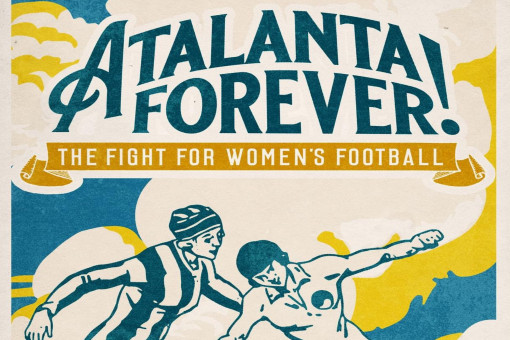
Earlier this month, we spoke to playwright Amanda Whittington about her play Atalanta Forever, a semi-fictionalised account of women’s football in Huddersfield leading up to the F.A. ban. Mikron Theatre toured the play over the summer. If you missed it, don’t worry: The University of Chichester Conservatoire has teamed up with Amanda and Mikron to develop the play for a main-stage production, which will run in March 2022. Get your tickets here. --HP: What moved you to write a play about a women’s football team other than Dick, Kerr Ladies, whose shadow always looms large?AW: Exactly that reason. Dick, Kerr Ladies seemed...
Jimmy Robson never played for Huddersfield Town, but his spell at the Leeds Road lasted longer than most of the 1001 players who have worn the blue and white stripes and came during one of the club’s most successful periods. Burnley LegendDuring his playing days, Robson had a terrific career at his first club, Burnley. In a spell that began in 1956, he won the First Division in 1960 and scored the Clarets’ goal in a 3-1 defeat to Tottenham Hotspur in the 1962 F.A. Cup Final. He also had a second chalked off for offside, though he always thought he’d...
Find out more about the history of women’s football in Huddersfield by browsing our two dedicated primary source collections: Women’s Football Archive and Women’s Football Timeline. If you are interested in supporting Huddersfield Town Women, their website can be found here, where you can stay up to date with results, team news, and match reports. You can also help sponsor women's team players, who have to pay to play.
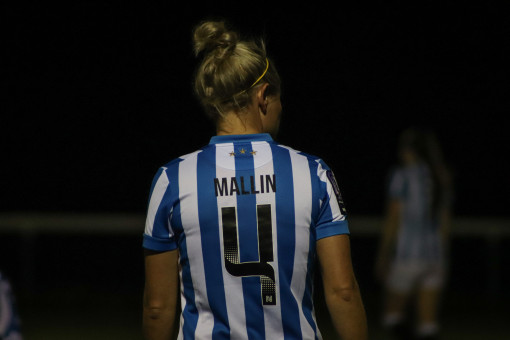
To mark the centenary of the F.A.'s ban on women's football, and to celebrate the history of the women's game in Huddersfield, we are pleased to announce the induction of Kate Mallin into the Huddersfield Town Heritage Project Hall of Fame. Longest Serving PlayerKate joined Huddersfield Town Women—then Huddersfield Town Ladies—at 11-years-old, playing in the Under-12’s side. She made her first team debut in October 2004 at the age of 15, meaning that she is the club’s longest serving player. She netted her first goal just a couple of months later against Hull City. At the beginning of the 2021-22 season, Kate, now...
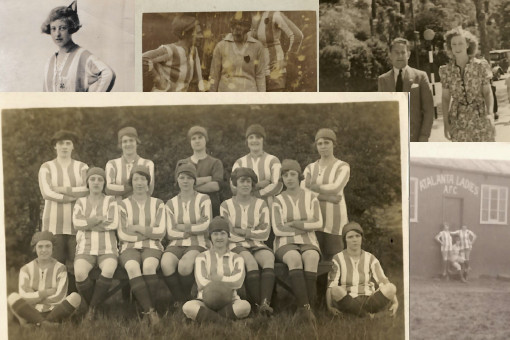
Earlier this year, we were contacted by a woman named Penny Mannings who asked whether we might be interested in several items that had recently come into her possession. Lost, Found, SharedWhile sorting through her late mother’s belongings, Penny found a large pack of newspaper clippings from the period 1932 to 1938. Each clipping had been written by Constance Waller. Although she had never met Constance, Penny knew that she was her maternal grandfather’s (Harold Barkworth) second wife, and, therefore, technically her step-grandmother. Intrigued, Penny did some further digging, discovering a series of photographs depicting Constance and other women in various football...
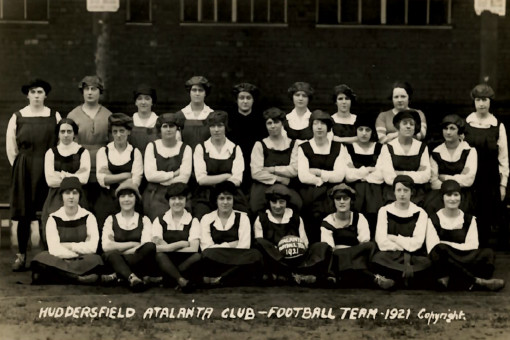
On a cold Boxing Day afternoon in 1920, more than 53,000 fans packed into Goodison Park, while a further 14,000 or so lingered outside, unable to enter. But they were not there to watch Everton. Instead, they had braved the elements to witness a much-awaited clash between two of England’s most popular football clubs: Dick, Kerr Ladies and St. Helens Ladies. With many men away at the front, the women’s game had grown in popularity during and immediately after the First World War. Clubs sprung up in every corner of the country, including in Huddersfield. Equal in WeightThe most prominent, Huddersfield Atalanta Ladies, was...
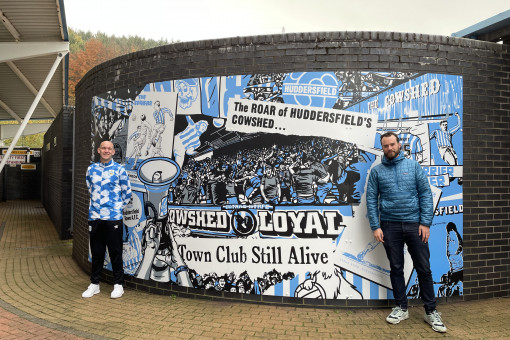
We're pleased to reveal that we have worked with the club, Cowshed Loyal, and local artist Peter O'Toole to bring a new mural to the South Stand, which is sponsored by Magic Rock Brewing. A celebration of Huddersfield Town and its fans, the mural has been given a permanent home within the South Stand, greeting fans through the turnstiles as they make their way to their seats via the external concourse. Illustrated by Peter O’Toole, the design depicts key points from the club’s history alongside references to more contemporary scenes, such as celebrations in the stand of the Cowshed Loyal and...
51 years ago today (yes, really), recently promoted Huddersfield Town hosted West Bromwich Albion in the First Division. Despite a poor start to the season for both sides, the programme notes promised “a feast of fast, free-flowing football.” Well, there were goals at the very least, with Ian Greaves’ side running out 2-1 winners. Winger Jimmy Lawson scored the first, before left-back Geoff Hutt found his way onto the scoresheet—one of only four times he would do so during his eight years at Leeds Road.View the matchday programme.
Seeing as it’s nearly the end of the year, we thought we’d provide another short update on the Heritage Project. Since our last one, several generous Town fans and local history enthusiasts have donated all sorts of items, from matchday programmes and cigarette cards to VHS videos and newspaper scrapbooks. As mentioned previously, we hope to scan these items, as well as others, sometime next year if members vote in favour of such a course of action at the 2021 AGM.Oh, and keep you eyes peeled for a special mural (more on that next week!). Here’s what else is new. Player DatabaseThree names...
Maurice Cox was born in October 1959 in the seaside town of Torquay. His father, Geoff Cox, had enjoyed an 18-year professional football career playing on the wing for Birmingham City and Torquay United, clocking in over 350 games. Geoff would continue to play for Bridgwater Town and Welton Rovers as an amateur as his career wound down and even had a taste of European football earlier in his career when he played in the Inter-Cities Fairs Cup for Birmingham against Inter Milan in 1956. Football or Academia?It’s fair to say that his son was interested in football from an early age...
James ‘Jim’ Kerray had an almost two-year spell at Leeds Road between 1960 and 1962, playing 60 games and scoring 13 goals. He returned to Huddersfield following his retirement from the game and later coached locally. He recently passed away at the age of 85.--A Late BloomerJim Kerray (Heritage Number 378) was a late bloomer in football terms. It wasn’t until he was 22 years old that he was offered a professional contract by Raith Rovers. He had begun his working life as an apprentice painter and decorator, while also playing for Dunipace Juniors. It was during his time with Dunipace...
40 years ago today, Mick Buxton’s Town side hosted a resurgent Millwall in the old Third Division. Somewhat appropriately given the date, Leeds Road’s most conspicuous—and frankly, irritating—ghosts once again paid a visit to the mortal realm, determined to haunt the home players from the first whistle to the last. Sadly, their spectral efforts were successful, as 8,546 souls watched the Lions run out 2-1 winners, with Town’s consolation coming from veteran forward Ian Robins. Still vexed by the result a couple of weeks later, a local pundit, last name of Loughrey, observed that the game had exposed the team’s “flaws...
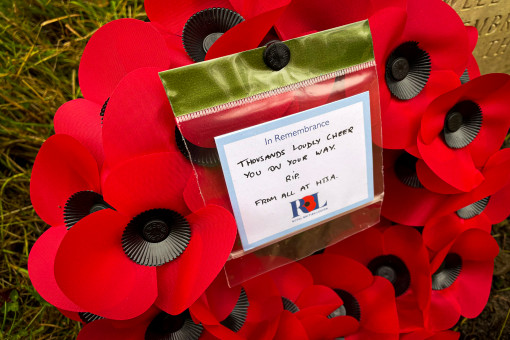
Ahead of today’s Remembrance game, HTSA members spent the morning tidying up Thomas Carter’s grave in Edgerton Cemetery. After scrubbing the headstone with toothbrushes and cutting the surrounding grass, they laid a wreath, flowers, and Town pennant as a mark of respect.Thomas ‘Tom’ CarterFor those who are unaware, Thomas ‘Tom’ Carter was a Town player who was killed on active duty during the Second World War. Carter was born in Huddersfield in 1923. As a teenager, he played in the local amateur leagues, before signing for his hometown club sometime in 1940, only a few months after Britain had declared...
Despite hailing from Doncaster, David Cork began his professional football career at Arsenal in 1980, having spent two years at Highbury as an apprentice. He had previously turned down Manchester United in favour of the Gunners. Soon after signing professional forms, he was loaned out to Swedish club GAIS, where he played five games before returning to Highbury. From Highbury to Leeds RoadFrom 1980 until 1983, Cork was mainly a reserve player but finally got his chance to shine in the first team when he made his debut in December 1983 against Watford in a 3-1 home win, replacing an injured...
On July 1st 2021, Josh Ruffels signed for Town on a free transfer after spending eight years at Oxford United. On September 28th, 2021, he became the 1,000th player to pull on the blue and white stripes of Huddersfield Town, coming on as an 87th minute substitute in a 3-2 win over Blackburn Rovers. But what became of the other landmark players? Number 100: William Martin (1911-1912 / 5 appearances)In December 1911, William Martin became Town’s 100th player, making his debut in a game against Burnley. Martin arrived at the club earlier in the year from Ilford as left-back cover for the...
Following on from last night’s emphatic 3-2 victory over Blackburn, we thought we’d share some more good news. As he ran on to the pitch in the 87th minute to replace Danel Sinani, Josh Ruffels became the one thousandth player to pull on the famous blue and white stripes in a competitive fixture. To mark the occasion, we published an open letter to congratulate Josh and introduce him to those who’ve gone before. To find out who the other 999 are, visit our Player Database collection.. We’ve also launched a fundraiser for the Town Foundation, with the aim of raising £1 for everyone...
On 28th September, Josh Ruffels became the one thousandth player to pull on the famous blue and white stripes in a competitive fixture. To mark the occasion, we’ve written an open letter to congratulate and introduce him to those who’ve gone before.--Dear Josh, To begin with, we’d like to congratulate you on your debut for the club. We don’t usually make a habit of writing to new players, but by a sheer stroke of luck, you happen to be the one thousandth person to wear the famous blue and white stripes in a competitive fixture. That seems as good a milestone as...
We hope that you’re basking in the warm glow of Town’s most recent victories and enjoying the international break. Assuming that you are, we thought we’d provide a quick update on the Heritage Project, which launched in earnest way back in July. The good news is that the website, which contains over 40,000 pages worth of Town-related history, has been visited over 18,000 times since then. We’ve also received an additional thousand or so pages and items from generous history buffs, including a treasure trove of material from the 1930s and 1940s donated by one David Longbottom. We hope to scan and add...
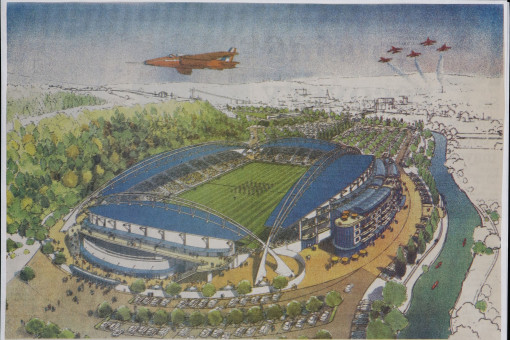
The plans for the £14m Kirklees Stadium were set in stone in August 1992, with a view to swinging open the doors to a new home and a new chapter in Huddersfield Town history at the beginning of the 1994-95 season. After 86 years of triumph and tribulation on the hallowed turf of Leeds Road, a new state-of-the-art stadium coupled with a retail and leisure complex was pencilled in to be constructed only 150 metres from the old Leeds Road ground. The plan was to create jobs and generate revenue for the town while concurrently boosting prospects for both football...
Ross McLean
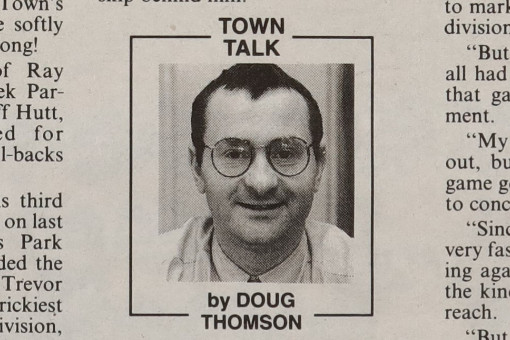
Last month, we spoke to respected journalist and Town fan Doug Thomson about the past, present, and future of Huddersfield Town. -- HP: Let’s begin with a simple question: Why Huddersfield Town?DT: Well, I come from Huddersfield, so it’s my hometown team. I’ve always supported them. In terms of the newspaper involvement, that came from starting to work for the Examiner and gradually edging my way to the football desk. HP: When did you start watching Town?DT: The first game I can remember is Town versus Arsenal in 1971, which I’m pretty sure was also the first match that I attended. I’d have...
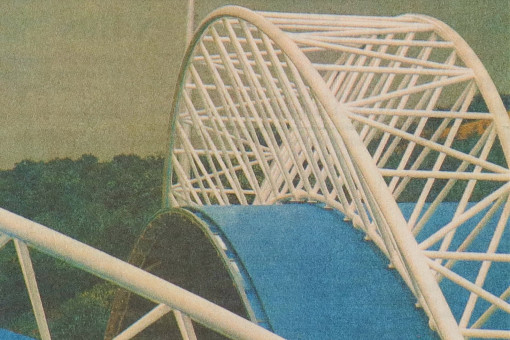
This article was published with the permission of Populous, the company which designed the John Smith’s Stadium. --The term ‘ground-breaking’ is often bandied about in architecture, but there is no better adjective to describe the John Smith’s Stadium. Opened in 1994, it is the building that rewrote the rulebook on sports architecture, won unprecedented awards for design, and pioneered a new business model for year-round revenue generation—forever changing the way these venues would be considered by architects, clubs and spectators. The project resulted from a review and safety assessment of Huddersfield Town FC’s existing Leeds Road ground. The club wanted a new home...
Populous
The Town faithful often wax lyrical about the Great Escape season of 1997-98, when Peter Jackson returned to the club and performed a Houdini act, rescuing it from certain relegation to Division Two. However, this wasn’t the first time such a thing had happened. Back in March 1993, former manager Mick Buxton returned to Leeds Road, just over six years since he’d been sacked, to help drag Town out of the mire.On The Precipice Ian Ross had been in charge since March 1992, having been promoted from assistant manager when Eoin Hand was sacked after a run of two wins in...
As part of the Heritage Project, we're asking Town fans to vote for their all-time favourite players and managers, from 'wing wizards' and 'bombers' to 'whackos' and 'King Davids'. The ten most popular will be inducted into our Hall of Fame. This week, football writer Oliver Fisher makes the case for three people whose names he believes should be immortalised in ones and zeros for eternity.--Peter JacksonNo hesitation from a personal point of view putting Jacko in. My first real season was the 2003-04 campaign, and during the summer before the season started I was made painfully aware as an eight-year-old...
Oliver Fisher
Town visit Hillsborough on Sunday to play third-tier side Sheffield Wednesday in the first round of the League Cup. How have the clubs fared against one another in the past? Head-to-Head Town have faced the Owls on 62 occasions since their first meeting on 25th September, 1926. Town won 26, lost 21, and drew 15 of these encounters. Their most convincing victory was a 6-1 rout at Leeds Road on 30th January, 1932, in the old First Division. Their worst defeat came in a Second Division tie on 29th November, 1958, when Wednesday triumphed 4-1 in front of a home crowd of 25,394. League CupThe two...
The Huddersfield Town Supporters Association (HTSA) is pleased to announce the launch of its Heritage Project website in association with local company Microform. The website is an open access archive that hosts over 110 years’ worth of material from Huddersfield Town’s long and storied past. BackgroundThe Huddersfield Town Heritage Project was born out of the crisis of 2003, when fans dug into their own pockets to save the club from liquidation. The remaining funds were set aside by members of the newly formed HTSA to consolidate the club’s history in one easily accessible place. Some of those funds were used to build the...
The Huddersfield Town Supporters’ Association (HTSA) is asking fans to vote for their all-time favourite players and managers, from 'wing wizards' and 'bombers' to 'whackos' and 'King Davids'. The ten most popular will be inducted into the newly launched Heritage Project’s hallowed Hall of Fame. Take part.
From the highs of the swinging 60s, came the lows of the mid 70s. Huddersfield Town football club found themselves in the old Division 4—the basement of English football. Struggling for money, the club even organised a concert to raise some much-needed funds. The band that was chosen to perform was ‘Mud’, extremely fitting considering the situation that Town now found themselves in. Turnstiles were at an all time low and the Terriers were known as the ‘’sleeping giants’’ of the football world. Some thought that we would never wake up.It was described as a bleak era in our history. The...
Over the years, 59 Huddersfield born players have worn the famous blue and white stripes. No. 19 on that list was also one of three to have played for England. Robert ‘Bob’ McNab became the first to do so in 1968, making his debut against Romania in Bucharest. From Rawthorpe to Leeds RoadMcNab was born in Huddersfield on July 20th, 1943, and grew up on Rawthorpe Lane, just a stone’s throw from Leeds Road. He attended Rawthorpe Secondary Modern where his headmaster once told him, “I should have an automatic caning machine for you!” Despite his subsequent career in football, McNab also...
Running a heritage project is fraught with risk. As soon as people find out what you’re doing, they assume that you live cheek by jowl with matchday programmes, old telegrams, and the disembodied head of Tilly the Terrier. In some cases, this leads to a perfectly well meaning offer to transfer the entire contents of their loft to your living room, or bedroom, or any room, really. On the whole, though, it’s an interesting and rewarding endeavour. And so it was this week, when local businessman Andrew Mear contacted us about a Huddersfield Town-themed poem he'd come across while researching the Highfields building...
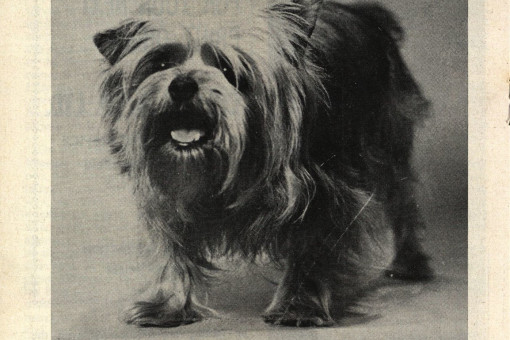
As someone born in the 21st century, it seems alien to me that Huddersfield Town were ever referred to as anything other than The Terriers. It seems a distinct part of the club’s culture and heritage—well at least to me, as I’ve grown up alongside the nickname, the crest, and various terrier mascots. The nickname certainly seems to have become more apparent in recent years, with the club and the fanbase supposedly exhibiting a ‘terrier spirit’. But where did this nickname come from, and what’s it got to do with Huddersfield?The connection to Huddersfield lies with the ‘father’ of the...
Alice Broome
This article was originally published in the Huddersfield Daily Examiner--I began feeling nervous, but I kept walking as fast as I could. It was only a few minutes to 6 (3pm GMT), Liverpool vs Huddersfield Town was about to start, and I still hadn’t found a place with a TV to watch the game.I’d been stressing about this for days, even taking to Twitter to find fellow Town fans in Hargeisa, Somaliland’s little capital. “It’s unlikely you’ll find any, but maybe you’ll find a couple of Scousers?” was the only response.Unperturbed, I set out on Saturday with the hope of finding a...
Megan Iacobini De Fazio
This article was originally published in the Huddersfield Daily Examiner--Watching Huddersfield Town play has been a bit of a mixed bag for me.I've cheered them on in rowdy sports bars in Kenya and in sticky Irish Pubs in Rome; one time, I caught the end of a game in a little shack in a Kakuma refugee camp, and Somali and Sudanese refugees shook my hand and told me they were happy we’d been promoted.And of course I’ll never forget being in Accra, Ghana, my woolly town scarf wrapped around my neck despite the oppressive heat, watching big man Laurent Depoitre plough through...
Today marks the launch of Town’s latest home kit, an occasion that seems to come around much quicker these days. In the not-too-distant past, football teams would often keep the same home kit for two seasons, but as the game has become more money-oriented and sponsorship deals have become more lucrative, it is now a yearly change. Town were relatively late to the party and it’s only since the 2007-08 season that home shirts have been swapped on an annual basis. It also wasn’t uncommon for teams to wear the subsequent season’s kit in the final game of the calendar, which...
Mikron Theatre are aiming to score with their next theatrical offering for their 49th year of touring. They will be premiering Amanda Whittington’s new play Atalanta Forever, which looks at the story of the pioneering women in football in 1920. Atalanta Forever will kick off at The Piece Hall, Halifax, on 9th June and then tour nationally by road and river until 19th September.It’s 1920, and in post-war Britain, women’s football is big news. Across the country, all-girl teams are pulling huge crowds in fund-raising games for wounded soldiers. Huddersfield amateurs Ethel and Annie take a shot at the big...
Peter Goy (Heritage Number 411) had already enjoyed a decent career before he arrived at Huddersfield Town in 1965.Although he hailed from Beverley in Yorkshire, Goy was playing for Lincolnshire Boys in a county representative match against Derbyshire Boys in 1953 when he was spotted by a scout from Arsenal. Soon afterwards, he got the call to go to Highbury, signing as part of the ground staff.After two years as an apprentice, Goy signed professional forms at the club in June 1955. Despite this, he was a member of the youth team that won the South East Counties League championship...
Derek Hawksworth has the distinction of playing for Huddersfield Town on two separate occasions. He had signed for Bradford Park Avenue in 1943 and played for them in the Wartime League, breaking into the team when he was just 16 years old. He also guested for Colchester United between 1945 and 1946. Unusually for the time, Hawksworth was a naturally right-footed player who played on the left wing. Although the Football League finally resumed in time for the 1946-47 season, Hawksworth was on his way to Leeds Road, signing for Town in July 1946. Alas, his first spell at the club produced...
Graham Bailey was born in Shropshire on March 22nd, 1920 and by the time he was 16, he’d signed on the ground staff at Huddersfield Town on August 10th, 1936. The manager at the time was Clem Stephenson, a former Town player himself between 1920 and 1929 before becoming manager in 1929. Stephenson was assisted by another former Town player in Jack Foster, who was the Assistant Trainer. Graham remembers those early days: “I was taken on the ground staff and we got 30 shillings a week for digs and then there were 10 shillings left for yourself.” It wasn’t until he...
In August 1929, George ‘Bomber’ Brown left Huddersfield Town after eight and a half years of remarkable success. In that time, he’d scored 159 goals and become the club’s record goalscorer. That record still stands today, with only a select few coming close to breaking it. Jim Glazzard (154) and Andy Booth (150) are the ones who stand immediately below Brown in the list. But how many supporters are aware of Billy Price? And how many know that he actually scored 234 first team goals for the club in a 10 year spell? In October 1937, eight years after the departure...
It was way back in 1934 when Huddersfield Town’s third team began to play matches at Beck Lane in Heckmondwike. It had played host to Town’s first ever FA Cup game in 1909 but it became the venue for Town’s third team games when the club began to rent it in 1934. It later became the home of Town’s junior side and the club eventually bought it in 1951, added new dressing rooms and even installed floodlights in 1954. This was quite something as Leeds Road didn’t get floodlights until 1961. The floodlights at Leeds Road were funded by the sale...
My name is Steven Downes and I’d like to give you an insight into the most interesting and volatile period in the club's history. As a sports fan and child growing up, I always watched football on TV. My first memory is watching the ball sail over David Seaman's head at the 2002 World Cup. I was 6 years old at the time and whilst upset that England lost, I wasn’t quite aware that my love affair with football had only just began. At the age of 14, I kept asking my parents to take me to a live football...
Steven Downes
Frank Worthington (Heritage Number 414) was one of the most charismatic players of his generation and a true entertainer of English football. Off the pitch, he was a character, too, known for his snappy dress sense and love of Elvis Presley. Frank was born in Shelf, West Yorkshire, on 23rd November 1948 to Eric and Alice. Eric had played for Manchester United as an inside-forward and Frank’s brothers Dave and Bob would also go on to have decent careers in the Football League. On top of this, Frank’s nephew Gary played for Huddersfield Town between 1986 and 1987. After initially training with...
The 2017/18 campaign was remarkable for Town fans in many ways. Each of us will have our own collection of memories that grew exponentially from the precise moment Christopher Schindler’s penalty hit the net at Wembley. Switching off our tellies, unplugging the radio or, as was the case for almost 40,000 of us, setting off back home on a long trek up the M1, every one of us put pen to paper for the first chapter of our own Premier League experience. And while I wouldn’t say my own journey unfolded in the manner I had anticipated—as in truth, I...
Cameron Pope
Huddersfield has a proud and long-standing sporting heritage. Go back to the middle of the nineteenth century, and you’ll see the beginning of it: playing fields full of amateur athletes buying into Victorian ideas of muscular Christianity; working class men given the chance to exercise and enjoy sports in their new home, having moved from the country to the growing industrial landscape of West Yorkshire. These sporting clubs played an important part in making Huddersfield more than just a town of industry; they played an important role in forging an identity for Huddersfield beyond the factory. There’s a reason why historians...
Peter Wilson
This article was originally published in the Huddersfield Daily Examiner--A few years ago, with World Cup fever in full swing, we thought it would be fruitful to delve into the Examiner’s archives to see how the people of Huddersfield watched and celebrated tournaments gone by. Having recently witnessed England’s 6-1 shellacking of Panama, and with ‘Football’s Coming Home’ still ringing in our ears, we decided to indulge our romantic side by reviewing the 1966 World Cup. A no brainer, right? Well, on paper, perhaps. You see, the most striking aspect of the Examiner’s 1966 coverage is that the sport editors seemed to...
This article was originally published in the Huddersfield Daily Examiner--When David Wagner swapped the banks of the Ruhr for the Colne, he took every opportunity to emphasise the parallels between the Yorkshire terrier and his preferred style of high-pressing, never-say-die football. Over the past few years, this happy coincidence has evolved into a full-blown philosophy—or ‘Terrier identity’—that has come to define Huddersfield Town; not just on the pitch, but off it, too. After all, what better represents a plucky underdog with ideas above its station than a plucky underdog with ideas above its station? Nothing, really, but that’s not for want...
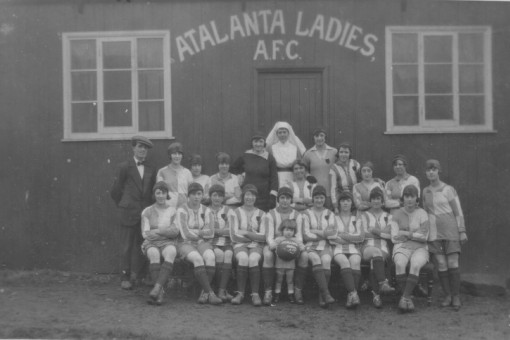
On 26th January 2020, Huddersfield Town Women played their first game at the John Smith’s Stadium—an exotic break from their usual home at the Stafflex Arena, near Storthes Hall. There was a lot of buzz around this seemingly momentous occasion, warranting a comment by the Yorkshire Post that “history has been made” and it appearing as a step towards more support for women’s football in Huddersfield. The attendance reached just over 1,000 people, which was seen as a great success—but whether this was truly history-making is open to debate.You may never have heard of Huddersfield Atalanta—and why would you? A...
The latest news, articles, and resources, sent to your inbox weekly.